



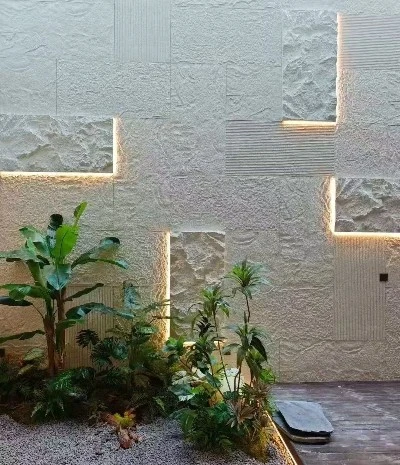
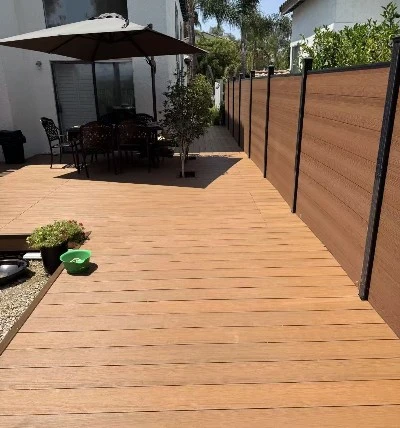


WPC = Wood Plastic Composite, also known as plastic wood, eco-friendly wood, recycled wood. It is a new type of environmentally friendly building material formed by the high-temperature composite of plant fibers and thermoplastic. It combines the texture of solid wood with the waterproof and corrosion-resistant properties of plastic. It can be 100% recycled and reused.
Advantages of WPC
Advantages of WPC
Waterproof, anti-corrosion, pest-proof: It does not absorb water, does not get worm-eaten, does not mold, and can be used in seaside / swimming pool humid environments.
No maintenance: No need to apply paint or anti-corrosion oil every year, just rinse with water.
Size stability: It does not crack, deform in cold, hot, dry or wet environments.
Environmentally friendly, no formaldehyde: According to the LY/T 3274 national standard, the formaldehyde content is ≤ 0.05mg/m³. Waste materials can be recycled and reused.
Processing is convenient: It can be sawed, drilled, nailed and cut, and is compatible with woodworking tools.
Long service life: Outdoor use for 15-25 years, which is 3-5 times the lifespan of anti-corrosion wood.


Weak points of WPC
Thermal expansion and contraction: For every 30℃ temperature difference, each meter expands or contracts by 1.5-3mm. Installation must leave expansion gaps.
Common bare PE will slightly fade under long-term exposure to the sun (the co-extrusion model significantly improves this issue).
Resistant to temperature differences: Avoid open flames and direct heating from long-term 70℃ or above heat sources.
Solid models have a relatively heavy weight, and the requirements for the support structure are higher.