


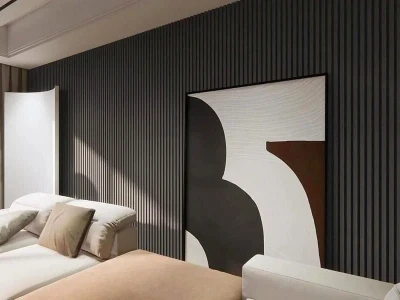
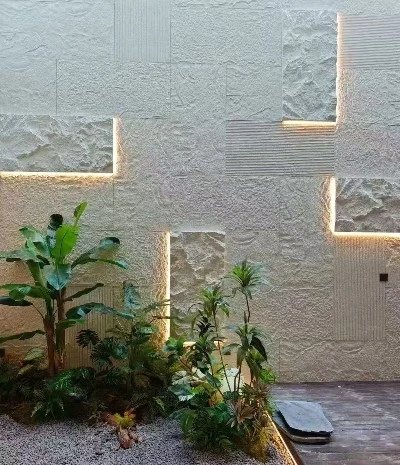
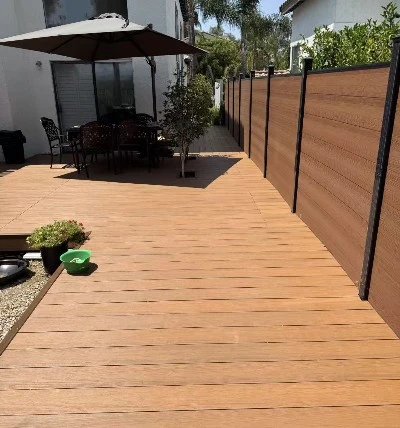

The most prominent advantage of soft stone lies in its exceptional flexibility and strong adaptability-a core characteristic that fundamentally distinguishes it from traditional stone materials. Whether applied to walls, ceilings, or irregularly shaped architectural elements such as columns and arches, soft stone conforms effortlessly; unlike traditional stone-which is prone to cracking or detachment due to its inherent rigidity and brittleness-soft stone remains intact and secure.
Soft stone boasts immense practicality, exhibiting outstanding performance in terms of weather resistance, fire resistance, and waterproofing, requiring minimal maintenance in daily use. Composed primarily of natural inorganic minerals bonded with modified polymer adhesives, it not only withstands UV radiation but also remains free of fading or cracking even after prolonged outdoor exposure. Furthermore, it maintains stable performance across extreme temperatures-from intense heat to severe cold-making it highly adaptable to the diverse climatic conditions of various regions. Classified as a Class A fire-resistant material, it is non-combustible, smokeless, and non-toxic when exposed to fire, thereby significantly enhancing a building's fire safety. Concurrently, its internal polymer network effectively seals pores, ensuring excellent waterproofing and moisture-proofing capabilities; consequently, it remains free of issues such as dampness or deformation even when utilized in moisture-prone areas like bathrooms or exterior walls, offering a service life that far exceeds that of ordinary decorative materials.
Soft stone also presents distinct advantages in terms of both aesthetics and economics, striking an ideal balance between visual appeal and cost-effectiveness. It precisely replicates the textures and color tones of natural stone-whether mimicking the feel of marble, granite, or cultural stone-delivering a visual effect that is both natural and lifelike. Moreover, its colors and dimensions can be fully customized to meet specific design requirements, accommodating a wide spectrum of interior design styles and enabling highly personalized decorative outcomes. Compared to traditional natural stone, soft stone features lower production costs and a more accessible price point; additionally, its ease of installation and minimal material wastage contribute to a substantial reduction in overall renovation costs. Finally, as an eco-friendly material that emits no harmful gases, it aligns perfectly with modern environmental standards for interior design, making it an ideal choice for a wide range of applications-from residential home renovations to large-scale commercial spaces and public buildings.
