


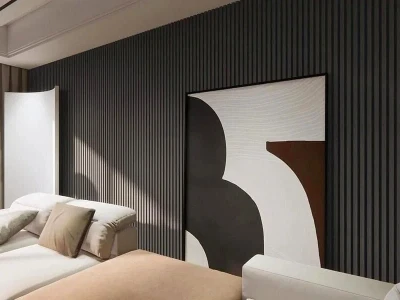
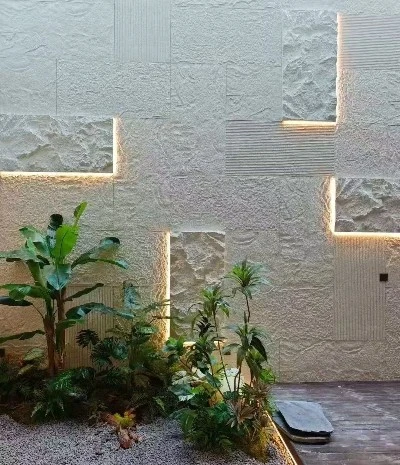
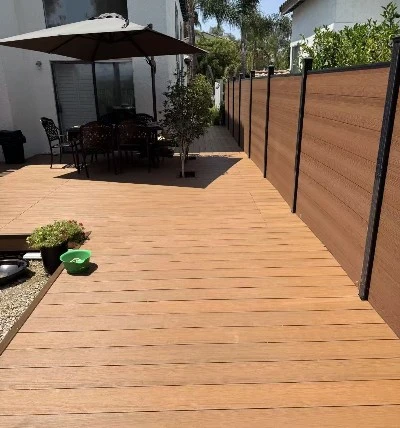

1. Market Overview & Demand Growth
Driven by large-scale urban renewal and old community renovation projects across China, the demand for MCM flexible stone (soft stone) has surged remarkably in 2026. Featuring ultra-thin thickness, anti-falling performance, direct overlay installation on old walls, and fast dry construction, the material cuts construction time by 50% compared with traditional tiles and natural stone. Engineering procurement volume has risen by 45% year-on-year, with old renovation projects accounting for 62% of total market demand.
In particular, cultural tourism homestays and special-shaped curved buildings show the fastest order growth. The market is upgrading toward large-format slabs, UV customized printing, and original texture restoration including rammed earth and old elm wood, expanding versatile application scenarios for both interior and exterior decoration.
Supported by national green building policies, MCM flexible stone has been included in the priority procurement catalog for green building materials. Multiple provinces have launched relevant subsidy policies. New public buildings and prefabricated constructions strongly encourage the adoption of flexible facing materials. New high-rise building exterior wall anti-falling regulations are accelerating the replacement of traditional ceramic tiles and dry-hanging stone. A1 fire-resistant flexible stone has become a mainstream choice for schools, hospitals and indemnificatory housing projects.
The overseas export market maintains steady growth. Chinese flexible stone products are mainly exported to Southeast Asia, the Middle East, Central Asia, Eastern Europe and Africa. With obvious advantages of light weight, low transportation cost and easy installation, the products are highly recognized by global buyers. CE certification and professional weathering test reports have become core inspection standards for overseas orders. Global flexible stone market achieves a CAGR of 6.8%, with small-batch customized orders and sample inquiries continuing to rise.
2. Technological Upgrades & Innovation
The industry has achieved comprehensive technical iteration in 2026. A new generation of nano protective coating has been widely applied, enabling the material to pass 1000-hour QUV accelerated aging tests with color difference ΔE ≤ 3, supporting an outdoor service life of 25–50 years and completely solving the traditional pain points of fading and pulverization.
In terms of production technology, mature inorganic substrate UV direct printing technology realizes highly simulated restoration of various natural textures such as elm wood, flowing stone, cave stone and rammed earth. Mass production of 2mm ultra-thin light-transmitting flexible stone has been realized, opening up new application fields of decorative walls and luminous background walls.
In terms of raw materials and environmental protection, the recycling rate of tailings and stone powder solid waste has been greatly improved. Adopting low-temperature molding technology, the production energy consumption is only 1/4 of that of traditional ceramics. Superior low-carbon and eco-friendly properties have become key competitive advantages and bidding bonus points for engineering projects under the national dual-carbon strategy.
3. Industry Pattern & Market Challenges
The industry is undergoing a shift from low-price involution to quality-oriented competition. Low-cost products from small factories still occupy part of the market, yet most fail to meet standards of freeze-thaw resistance and UV resistance, resulting in fading and peeling within 1–2 years of outdoor use. Engineering purchasers are increasingly focusing on official test reports, factory production capacity and practical project cases instead of simply comparing prices.
Industry concentration is continuously increasing. Leading manufacturers have expanded fully automatic production lines to stabilize product quality and delivery efficiency. Direct procurement from source factories has become the mainstream trend for engineering and foreign trade purchases, effectively avoiding markup and after-sales absence from intermediate distributors.
Two product tracks develop in parallel in the market: PU stone features strong three-dimensional perception and is more suitable for indoor decoration; while inorganic MCM flexible stone with A1 fire rating dominates outdoor and exterior wall scenarios. More engineering bidding documents have begun to clearly distinguish substrate types to avoid material misapplication.
4. Exhibition & Global Business Trends
At domestic exhibitions including Canton Fair and Guangzhou Construction Expo, the flexible stone and soft ceramic exhibition areas have maintained high popularity, with overseas merchants focusing on weathering resistance certificates, CE certification and OEM customization capabilities. In overseas exhibitions held in the Middle East and Turkey, lightweight flexible exterior wall materials have become a hot topic, and international buyers prefer large-size slabs, simplified packaging and fast sample delivery services.
5. Industry Core Summary
In 2026, the MCM flexible stone industry embraces dual-driven growth from urban renewal domestic demand and global export expansion. The industry is transforming from simple stone imitation to high-value customized products with diversified functions including high weather resistance and light transmission. Standardized certification of fire resistance and weather resistance, as well as green building qualifications, have become essential thresholds for winning domestic engineering and overseas export orders.